
AHP DAY Newsletter – Oct 2026
Welcome to our latest newsletter
Welcome to our October Newsletter, celebrating National Allied Health Professional (AHPs) Day. We’re thrilled to share some of the work the AHP working in renal across London are doing. We hope you will find it interesting and that it maybes get you thinking how you can use their work in your unit.
Focus on Dietetics
Dietetic International Peritoneal Dialysis Nutrition Guideline
Deepa Kariyawasam, Renal Dietitian from King’s College Hospital co-authored the international peritoneal dialysis nutrition guideline with other MDT authors from around the world; the first guideline specific to PD nutrition.
Deepa says:
“I was one of the lead co-authors of the inaugural nutrition practice recommendations for individuals receiving peritoneal dialysis (PD), developed by a group of internationally known MDT authors. This project was a joint initiative between the International Society of Renal Nutrition and Metabolism and the International Society for Peritoneal Dialysis.
We reviewed the best available scientific evidence, drawing on diverse expertise across renal nutrition, clinical practice, epidemiology and patient care.
Throughout the process, we worked collaboratively to reach consensus on key recommendations, ensuring they were clinically relevant, feasible and aligned with broader public health nutrition principles to allow people living with kidney disease on PD to achieve healthy eating lifestyles with a diverse range of foods. The resulting guideline represents a significant step forward in supporting consistent, high‑quality nutritional care for people receiving PD, and I am proud to have contributed to its development.”
The full guideline can be found here (open access): Joint International Society of Renal Nutrition and Metabolism (ISRNM) and International Society for Peritoneal Dialysis (ISPD) practice recommendation on nutrition management in peritoneal dialysis
The guideline was launched at the International Congress of Renal Nutrition and Metabolism in Berlin in September. Deepa will present the guideline at the online British Dietetic Association Kidney Dietitians Specialist Group (KDSG) Kidney dietitians week meeting on 20th October. This is free to BDA KDSG members.
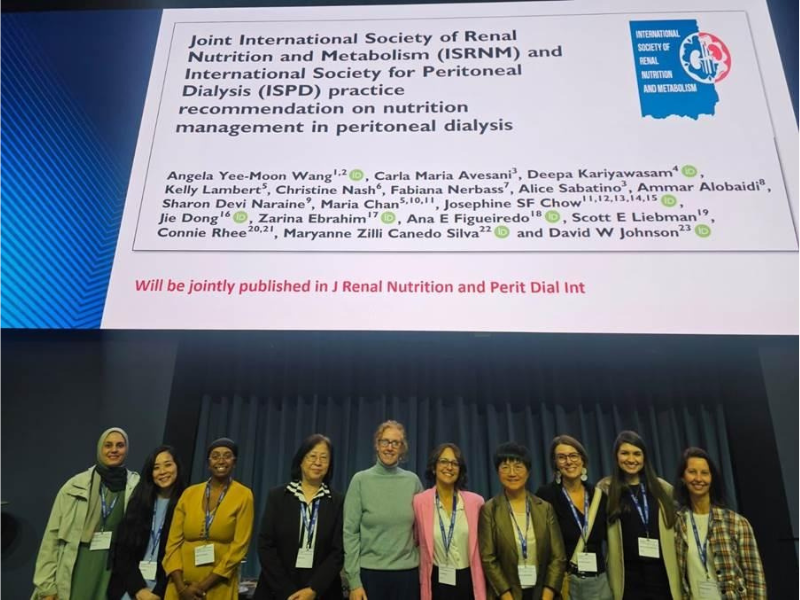
Deepa, third from the left, and co-authors share their work at International Congress of Renal Nutrition and Metabolism, in Berlin
Nuts about Nutrition Screening
Helena Jackson, NIHR Doctoral Clinical Academic Fellow and Highly Specialist Renal Dietitian and St George’s has lead a project to develop a screening tool to identify malnutrition in out-patients. Helena explains:
“Protein-energy malnutrition is commonly associated with chronic kidney disease (CKD), causing weakness, tiredness, serious medical problems and more time in hospital. Early identification of malnutrition makes is easier to prevent and treat. It is important to have the right nutrition screening tool to do this in a practical, reliable and safe way. A dietitian-led NIHR funded project based in SW London aims to adapt an existing inpatient nutrition screening tool (iNUT) for kidney outpatient services, by working closely with nurses and service users. The multi-professional research team which includes lived-experience advisors, plans to:
- Explore staff and service user perspectives on CKD malnutrition and nutrition screening
- Codesign a kidney outpatient nutrition screening tool (oNUT), with staff training materials and patient self-help guidance
- Introduce and test these for validity and acceptability in CKD outpatient settings.
It is hoped that the new tool and resources will support a proactive multidisciplinary approach to the nutritional care and wellbeing of people with CKD and lead to further research into the prevention and treatment of malnutrition.”
Building confidence in community dietetic teams
Community dietetic teams are often unsure about the needs of people with kidney disease. As a result, many referrals reach the renal team that aren’t renal-specific, such as poor appetite or need for general healthy eating advice.
To address this, King’s renal dietitians led face-to-face training at community sites in the Woolwich and Kent areas, and was very well received. Sessions covered:
- the stages of kidney disease
- when potassium does and doesn’t need attention
- why healthy eating is right for most people, without unnecessary dietary restrictions
- which supplement drinks are suitable
Referrals to the specialist renal team at Kings appear to have fallen, and community teams now know who to contact for advice. The aim is for local teams to keep ownership of patients, with the renal team acting as a guiding source.
Dietetics supporting optimum potassium levels for people on PD
The renal dietetic team at the Royal London has set up a potassium optimisation clinic for people on peritoneal dialysis (PD). A review of around 220 PD patients found that about a quarter had low potassium. Low potassium is linked to peritonitis, one of the main reasons people stop PD.
The review also showed that only about half of patients with low potassium were previously referred to dietetics. Of those who got dietary advice, only about half saw their levels improve. Many people were reluctant to move away from low-potassium diets they had followed for years.
The clinic is run jointly by a consultant and dietitian Katie Durman. It combines dietary advice on high-potassium foods, potassium supplement salts and amiloride. Interim results show potassium levels have risen in those they’ve seen, and the team is now planning a fuller evaluation.
Staying Healthy when taking Medications for Obesity
The British Dietetic Association’s Obesity Specialist Group have developed resources to support people taking obesity medications. Included in this is a new resource which is tailored for people with kidney disease.
These resources have been developed through a process involving people living with obesity taking medications for obesity, dietitians and other healthcare professionals and are free of charge to the public and healthcare professionals.
Focus on Occupational Therapy
Improving Quality of Life for people on Dialysis
Eilish Barry, OT at Guy’s hospital shares the work the renal OTs there have been developing in collaboration with their psychology colleagues:
“Our Occupational Therapy and Psychology teams have recently secured funding to develop resources aimed at improving quality of life and treatment tolerance for patients receiving haemodialysis. Patients often spend a significant proportion of their week undergoing dialysis, with limited opportunities to engage in meaningful activities that support wellbeing, emotional health, and occupational engagement.
We have observed high levels of anxiety and challenges with treatment tolerance amongst our dialysis patient cohort, which can have a significant impact on patient experience and overall quality of life. In response, we have developed a range of wellbeing and engagement boxes for use during dialysis sessions. These include creative activities, arts and crafts resources, sensory items, fidget tools, speakers for music and relaxation, lavender products, mindfulness resources, and other occupation-focused activities designed to promote wellbeing and meaningful engagement during treatment. The project aims to support patients in managing symptoms of anxiety and distress, enhance coping during dialysis sessions, and improve overall quality of life whilst living with kidney disease.
We are also developing sensory integration packs to help patients identify personalised strategies to improve comfort, self-regulation, and treatment tolerance during dialysis. The project has been developed collaboratively between Occupational Therapy and Psychology, with a focus on supporting both physical and emotional wellbeing.
We are currently entering the implementation phase as we are waiting for the delivery of items and will begin introducing these resources to patients across the dialysis service, predominantly on Astley Cooper”
OT and dietetics in community CKD
The Royal Free has recently been able to place an occupational therapist in its community CKD service, possibly the first OT in a service like this. The nurse- and pharmacist-led service supports people with early CKD to manage their kidney disease in the community, and so avoid needing based hospital intervention. A dietitian has also been embedded, so the team can refer patients directly to OT and dietetics when needs are identified.
Focus on Physiotherapy
Prehabiliation- Supporting People Preparing for Kidney Transplant
Jules Briggs, Kidney Research UK Allied Health Professional Fellow, Post Graduate Student King’s College London and Clinical Lead Renal Physiotherapist, is leading work on prehabilitation for transplantation. She explains:
“Individuals living with advanced CKD frequently present with low levels of physical activity, greater risks of poor nutritional status and mental health conditions. Prehabilitation aims to support people prior to a surgical event in order to put them in the best physical and psychological position going into surgery, with the aim to support their recovery and long-term health.
Kidney transplantation is the gold standard treatment for individuals who reach end stage CKD. Given the work-up process and potential long waiting times that individuals face, could this be the optimum time to provide an intervention to support people holistically prior to kidney transplantation?
Jule’s PhD programme aims to: further understand the role of prehabilitation in those working up and awaiting kidney transplantation; develop a multi-modal digital programme; and conduct a feasibility randomised controlled trial to understand if this is acceptable for people and if it improves physical, nutritional and mental health outcomes. It seeks to understand how digital prehabilitation works for people preparing for kidney transplantation, before further refining the aim to look at additional research and work to delivering this as an important adjunct to pre-transplant care.”
Building a joined-up transplant physio pathway
Physios at the Royal Free now cover the whole transplant journey. Prehabilitation was part of their K-Fit programme (the 3Ps funded weight management clinic for people who couldn’t access transplantation due to obesity), and the team is now developing post-transplant follow-up. Physios see patients at the CNS-led acute transplant clinic, followed by a phone review at three months, when exercise guidance changes. Next, the team will look at acute ward provision so the pathway is joined up end to end.
Congratulations to K-Fit physio, Michelle, for having an abstract accepted for this work at the Chartered Society of Physio annual conference this year.
Flow champions tackle deconditioning on the wards
Guy’s and St Thomas’ is running an MDT project on inpatient flow, including aiming to getting renal patients in and out of hospital as quickly and safely as possible. Physiotherapist Lyndsey Abdulnassir is a ‘Flow Champion’ and is using the project to address the inactivity and deconditioning often seen in renal inpatients. The team has developed resources for the whole MDT. These cover why getting out of bed matters, what to do, and where to find help.
A therapy-led frailty service for kidney patients
The Royal Free’s renal frailty service is one the team is particularly proud of. Set up with Renal 3Ps funding, the OT and physio led service began as frailty clinics in advanced kidney care (AKC) and is now able to take referrals from home therapies clinics too. The Team are delighted to have had an abstract of their work accepted at the British Geriatrics Society Autumn Conference- congratulations to Michelle, Physio, and Elise, OT!
Physio and dietetic led Weight management clinic
The renal weight management clinic at Guy’s and St Thomas’ has restarted in a new format that now includes GLP-1 prescribing. Patients get a mix of group sessions and one-to-one face-to-face appointments.
Physiotherapy and dietetics lead the clinic, with input from psychology and an endocrinologist to support medication use. It’s early days, but the clinic is going well.
New LKN interactive tool: who to refer to whom, and when?
The LKN Multi-Professional Team has finalised an interactive tool to help clinicians decide when to refer people with kidney disease to the wider MDT.
The tool builds on a comprehensive, evidence-based document developed by the AKC group and members of the MPT.
The interactive tool allows you to selects a symptom or issue, such as fatigue. The tool then shows which multi-professional team members to consider referring to, when and how to screen, and any self-help resources. Many symptoms need more than one profession, so the tool reflects that. It is designed mainly for use in hospital clinics and notes that not every service has access to every profession in-house.
The tool will be available on the LKN website soon, and a poster with a QR code is on the way to help make access from clinic easy.
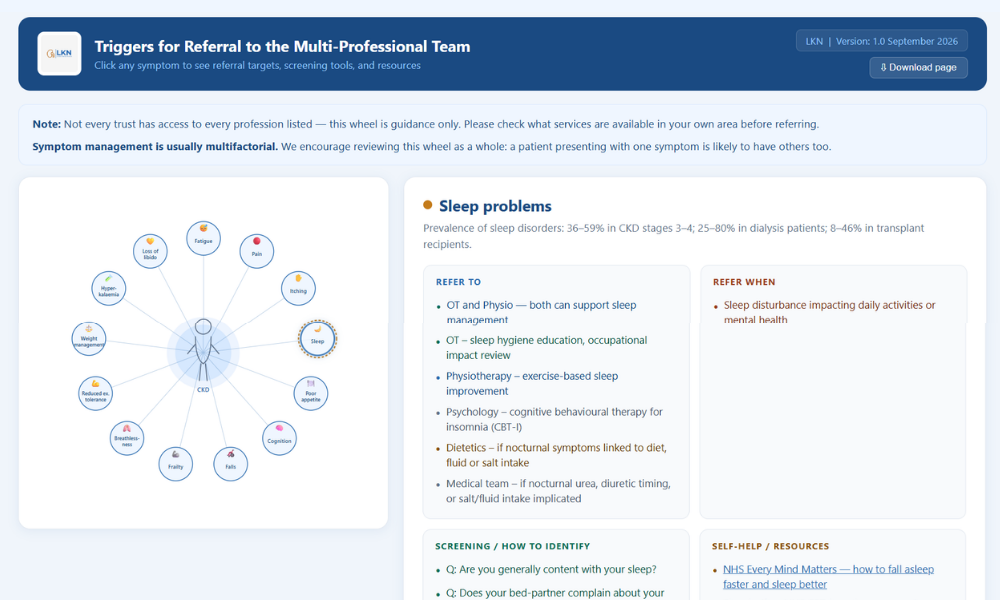
An interactive tool to help clinicians decide when to refer people with kidney disease to the wider MDT
Shaping national guidelines
Lisa Ancliffe, Clinical Lead OT for renal at Royal Free Hospital, sits on the working groups for two UK Kidney Association guidelines, on symptom management and frailty. Lisa believes having AHPs in the room has made a real difference to their content. For example, their input means that the Symptom Management Guideline will include a full fatigue section, the most commonly reported symptom. In addition, the frailty guideline will include a section on cognition and its management.
Katie Durman, Renal Dietitian at Royal London, and LKN Multi-Professional Lead, is part of the group reviewing the UKKA pregnancy guideline, Katie has worked with Rosie Campbell, renal dietitian working in Manchester, the updated version will have a more comprehensive evidenced based nutrition section.
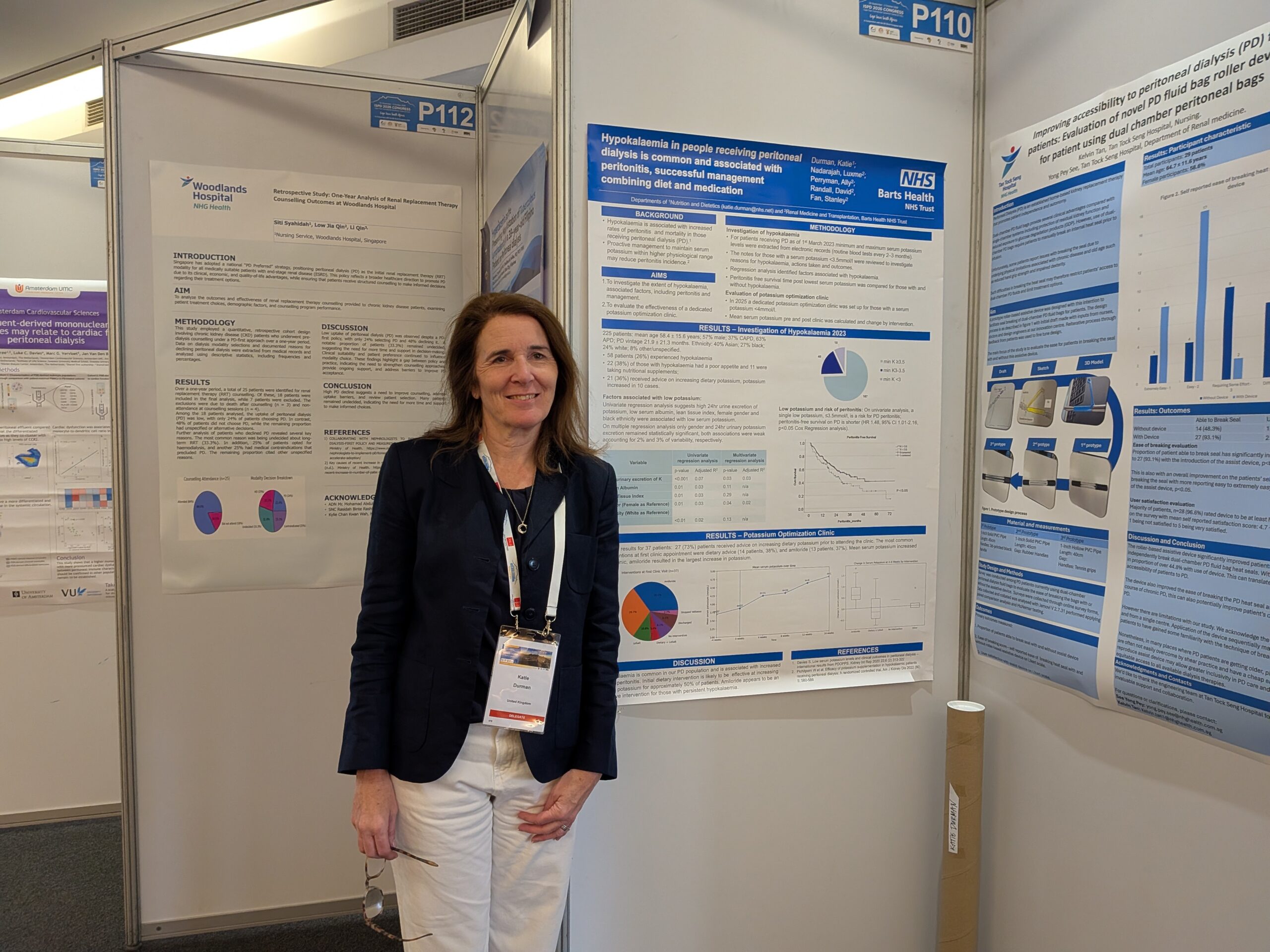
Katie Durman presenting her potassium optimization at ISPD (internation society of peritoneal dialysis) Congress in Cape Town 2026